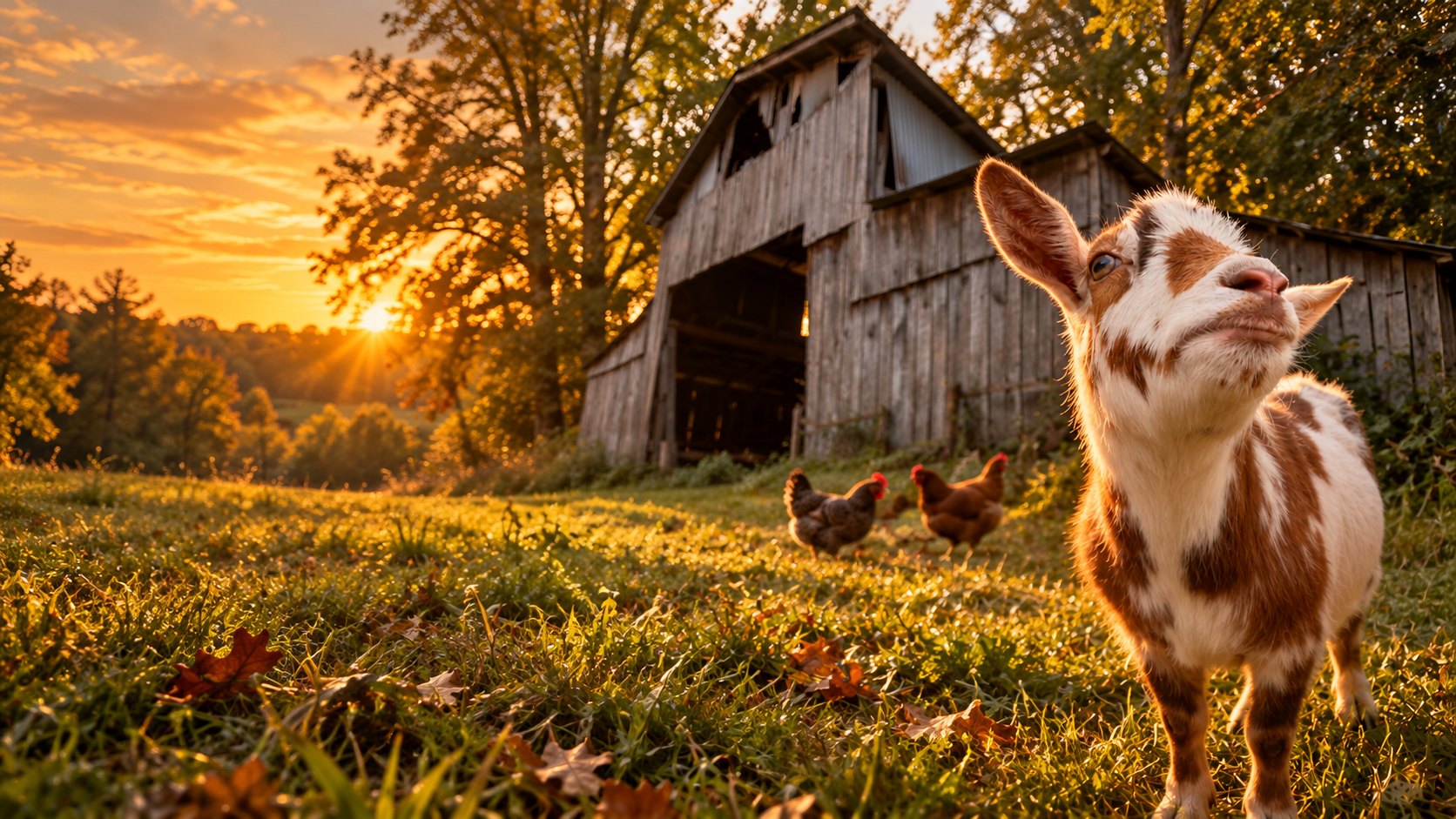
Life got a little
more goat.
Practical help for the animals, the garden, and everything that somehow became your responsibility.
Your homestead, one animal at a time
All animals →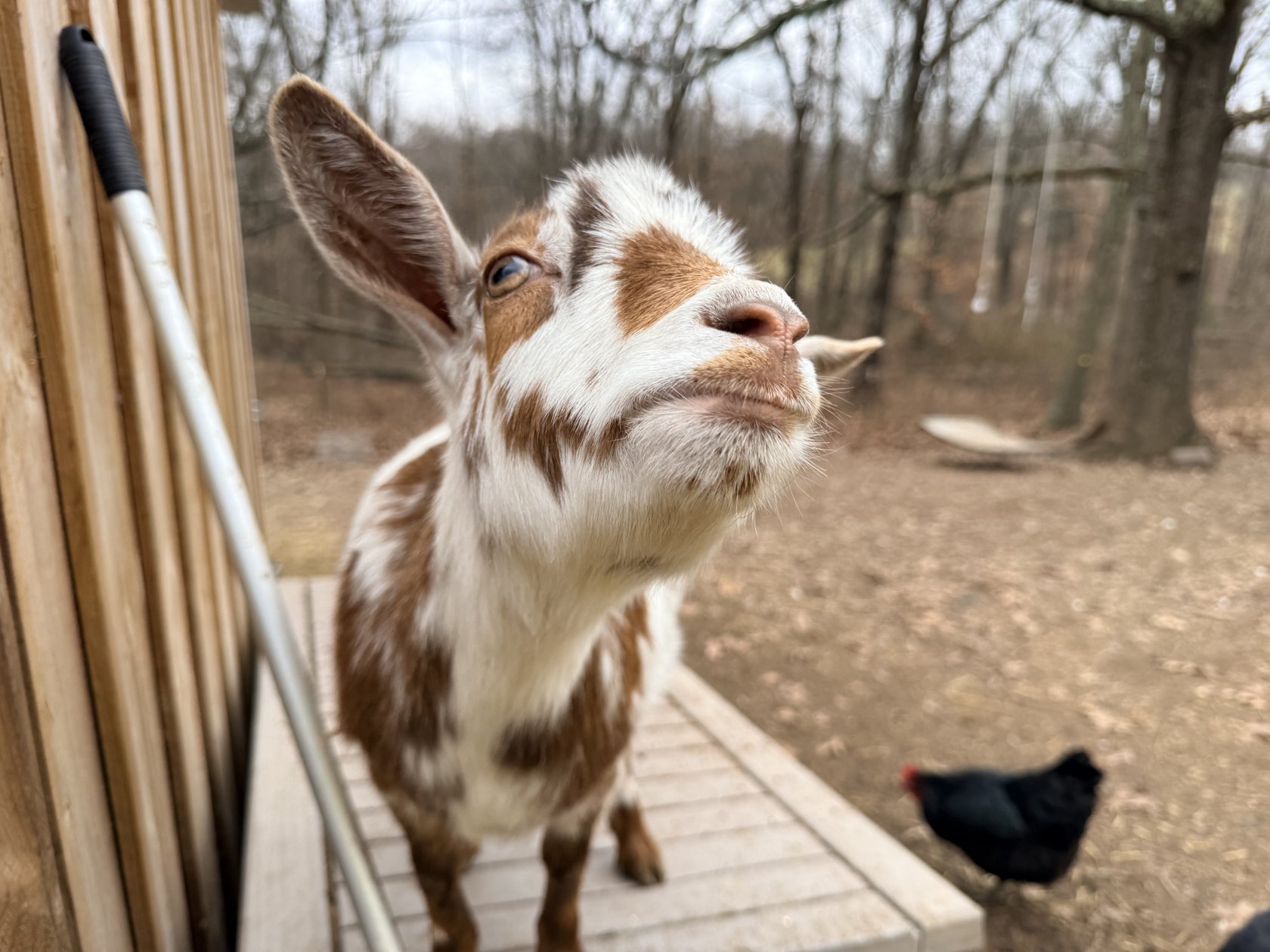
Goat life
Care essentials, breeds, and those first-time moments.
The feathered crew
Find the reference for your flock.
The season ahead
A few useful priorities before the next season arrives.
A little less guessing
All tools →How much hay?
Bales, storage, and budget.
Print. Hang. Done.
Animal cheat sheets for the barn wall.
This week’s list
Keep the next few chores in view.
Ask the Almanac
Three free questions each day.
One day we had a normal life.
Then my wife got goats. Here’s how the homestead—and the guide we needed—came about.
Find your next chapter.
From your first animal to a full pantry. Start where you are.
Put a tool to work.
Choose a job. Get to the useful part.
For people who get it.
Farm-life humor to wear. Practical gear to put to work.
Wear the chaos
Animal personalities, accidental homesteaders, and farm-life humor.
Homestead gear
The goat stand, dehydrator, and plant tags we’ve picked for the homestead.
MWGG merchandise is printed and shipped by our print-on-demand partners.
Moon Calendar
This Month's Priorities
Your first year
Nobody hands you a manual when the goats show up. Or the chickens. Or the bees your wife ordered "just to try." This is the guide you wish existed on day one — not written by someone who grew up on a farm, but by people who figured it out the hard way and lived to tell about it.
Your First Year, Step by Step
Phase 1 — Before You Begin
▶Know your land before you stock it
Walk every acre. Identify water sources, natural shelters, soil type, low spots that flood, and existing fencing. Sketch a rough map. Your land will tell you what animals make sense — don't buy a goat before you know if you have the fencing to contain one. (Spoiler: goats will find every gap you missed.)
Start with chickens — not goats, not cattle
Chickens are the gateway animal for good reason: low cost, forgiving, fast feedback, and you get eggs within months. They teach you feeding rhythms, predator management, health observation, and the emotional reality of animal loss — all at low stakes. Master chickens first. The goats will still be there when you're ready. Unfortunately.
Find your three lifelines before you need them
Your nearest farm supply store. A large animal vet (not a dog-and-cat vet — an actual large animal vet who won't look at your goat like it's a science experiment). And a neighbor who's been homesteading for 10+ years and will answer your panicked 9pm texts. These three relationships will save you more than any book, including this one.
Stock your medicine cabinet before something goes wrong at 10pm on a Sunday
Because it will. Stock: electrolytes, Blu-Kote wound spray, Vetericyn, a digital thermometer, syringes, Banamine for fever, and a basic first aid reference. The farm store is closed. The vet doesn't answer. You will be very glad you have these things already on the shelf.
Phase 2 — Spring & Summer (Months 2–6)
▶Plant a garden that's 25% smaller than you think you should
Every first-year homesteader plants too much. You will have more zucchini than your family, your neighbors, and your neighbors' neighbors can eat. You'll also have more weeding, watering, and harvesting than you planned for — while also managing animals who have opinions and emergencies. Start modest. Expand next year when you know what you're doing.
Add your second animal type only after chickens feel easy
When feeding and checking your chickens takes less than 20 minutes and you've stopped second-guessing every sneeze — that's when you're ready to add rabbits or goats. Not before. Stacking learning curves is how people get overwhelmed, make expensive mistakes, and start googling "how to rehome a goat."
Learn to preserve food before the harvest hits you like a truck
Take a canning class. Watch water bath canning videos. Buy the Ball Blue Book. When August arrives and your garden produces 50 pounds of tomatoes in two weeks, you need to already know what you're doing. Scrambling to learn mid-harvest leads to wasted food, unsafe jars, and a kitchen that looks like a crime scene.
Build your daily rhythm before adding more chaos
Morning chores, evening chores, weekly tasks — get this on a schedule that becomes automatic. Write it out. Laminate it. Post it in the barn. A homestead runs best when it's woven into your day rather than constantly requiring mental energy to remember. Your animals don't care that you had a long day at work.
Phase 3 — Fall Preparation (Months 7–9)
▶Get your hay in before September or pay for it later
If you have goats or cattle, you need to know how much hay you'll need all winter and have it sourced and stored by early fall. Running out of hay in January in the Midwest is not an inconvenience — it's a crisis. A goat needs roughly 2–4 lbs of hay per day. Do the math. Then add 20% because things always go longer than expected.
Winterize everything while you still have feeling in your fingers
Heated water buckets are not optional in the Midwest — they're survival equipment. Inspect coops, barns, and hutches for drafts. Animals can handle cold. What kills them is wet and cold together. Ventilation matters as much as insulation. Fix things in October, not January.
Do an honest year-end review
What worked? What cost more than expected? Which animal are you genuinely glad you have? What would you tell yourself on day one? Write it down. Your second year is dramatically easier if you actually debrief your first one. The homesteaders who burn out skip this step.
Phase 4 — Your First Winter (Months 10–12)
▶Winter is planning season, not rest season
Order seeds in January before the good varieties sell out. Plan your garden expansion. Decide which animals to add. Research breeds. Take the online courses. Sharpen tools. Repair equipment. Winter is the gift of time you absolutely will not have in spring when everything is born and growing and escaping simultaneously.
Evaluate your flock and herd honestly
Not every animal earns its keep. A hen that hasn't laid in months, a doe that's a difficult milker, a rabbit that doesn't breed well — winter is when you make hard decisions about culling or selling. This is part of homesteading. It gets easier with practice. It never gets completely easy, and anyone who says otherwise is lying to you.
By spring, you'll be a different person
Your hands will be rougher. Your sleep schedule will be different. Your grocery bill will be lower and your pantry will be fuller. You'll know what mastitis looks like, which plants your goats will destroy on sight, and exactly how loud a rooster is at 5am. You'll also understand, finally, why people do this — and why, against all reasonable expectation, you're going to keep doing it too.
Every homesteader has a first time. First kidding. First sick animal. First time holding an elastrator tool wondering what you've gotten yourself into. These guides walk you through the milestone moments step by step — written for people who have never done it before, not people who grew up doing it.
Goats
Chickens
Cattle
Bees, Rabbits & Dogs
Garden & Homestead
Animal Care Reference
The homestead doesn't care what else you have going on. It runs on a calendar, and that calendar waits for no one. This is your year at a glance — click any month and find out exactly what's coming at you so you're not caught off guard again.
The Homestead Year — Midwest
August will come for you. One day your garden is fine, the next you have 40 zucchini, a hundred tomatoes, and no idea what to do. Preservation is the skill that turns the chaos of harvest into a full pantry that carries you through winter. Start with one method. Master it. Then add the next.
Food Preservation Methods
Considering a dehydrator? See the OSTBA model from our own purchases in Homestead Gear.
At Least the Food Doesn't Escape
When you're juggling animals, gardens, and a to-do list that never ends, you need recipes that don't require a culinary degree. These are the tried-and-true staples from homestead kitchens — not fussy, not precious, just solid food that disappears fast and doesn't judge you for making it at 9pm after evening chores.
Got a recipe that's saved your weeknight? A family favorite that's homestead-approved? We'd love to see it.
Printable Cheat Sheets
One-page reference guides for each animal — quick care essentials, emergency triage, breed info, and seasonal notes. Print them, laminate them, hang them in the barn. When something goes sideways at 6am, you'll know exactly where to look.
Putting the references to work? Explore our homestead gear picks, including a goat-handling stand.
Which Breed Is Right for You?
Answer a few questions about your setup — your land, climate, goals, and experience — and we'll match you to the breeds that actually fit your life. Not just the pretty ones on Pinterest.
This Week's Tasks
Loading current week...
Common "Oh No" Situations
This is practical homestead guidance, not a substitute for your large animal vet. When in real doubt — call the vet. That's what they're there for.
Hay calculator
How much hay do you actually need? Put in your herd, pick your window, and we'll give you a real number — plus what to budget, how much space to plan for, and what you're probably forgetting.
Enter your animals and how many months you need to cover. We calculate daily consumption, total bales, weight, and storage space. Adjust bale weight to match what your supplier actually sells — square bales vary a lot.
Ask the Almanac
Three free questions per day. Browse the guides and cheat sheets anytime.
No question is too basic. No situation too weird. We've all stood in a field holding an animal wondering what on earth to do next. Ask anything — animals, garden, seasons, preservation, first times. You're not the first person to ask and you won't be the last.
Your homestead: Chickens · Goats · Cattle · Rabbits · Ducks · Geese · Bees · Guardian Dogs · Midwest · Nobody planned this.
How We Got Here
My wife got goats. I didn't vote for this. One day we had a normal life, and then somehow we had chickens, goats, cattle, rabbits, ducks, geese, bees, and four livestock guardian dogs named Asha, Bear, Grizz, and Koda. I had no idea what I was doing. So I built the tool I wish had existed on day one — part Farmers Almanac, part mentor, part 10pm panic reference. It's free. It's honest. And it's for everyone who didn't see this coming.
What This Is
🌱 Free to Start
All reference content — seasonal guides, animal care, first times library, year calendar — is free. The AI-powered Ask the Almanac gives 3 free questions per day. The guides and printable cheat sheets remain available after the daily question limit is reached.
📖 Encyclopedia + Mentor
Built to feel like both. Deep reference you can trust, written in the voice of someone who's been there — not a textbook, not a corporate FAQ. Real answers for real situations on a real homestead.
🤖 Powered by AI
The Ask, Uh Oh, and all the guided sections are powered by Claude — Anthropic's AI. It's tuned specifically for this homestead, this region, and these animals. Not generic advice. Contextual guidance.
The Homestead
Our Animals
Support This Project
This tool is built by a couple of accidental homesteaders who wanted something better than late-night Googling. The best things you can do are:
- Share it with someone who needs it
- Tell your story when you do — that's how people find us
- Join the My Wife Got Goats community on Facebook
Every share helps another accidental homesteader find this. That's the whole point.
Find Us
📘 Facebook Page
Updates, homestead moments, and the occasional goat doing something ridiculous.
Follow AlongPhotos from the homestead. Cevin makes regular appearances. The geese photobomb everything.
Follow Along👥 Community Group
A group for accidental homesteaders to share, ask questions, and commiserate together.
Join the GroupBuilt in the Midwest. Powered by stubbornness, curiosity, and a wife with very strong opinions about goats. Protected by Asha, Bear, Grizz, and Koda — who also didn't plan any of this.
Disclaimer
Last updated:
Not a Veterinarian. Not a Doctor. Not a Lawyer.
My Wife Got Goats is a practical reference tool built by homesteaders for homesteaders. The information provided on this site — including but not limited to animal care guidance, health advice, emergency procedures, gardening recommendations, and food preservation instructions — is for general informational and educational purposes only.
Nothing on this site constitutes professional veterinary advice, medical advice, legal advice, or any other form of licensed professional guidance. We are not veterinarians, doctors, lawyers, or licensed agricultural professionals. We are people who have goats and figured a lot of this out the hard way.
Animal Health and Emergencies
The animal care information, emergency guidance, and health-related content on this site is not a substitute for professional veterinary care. When an animal is seriously ill or injured, contact a licensed veterinarian immediately. The "Uh Oh" section and AI-generated responses are intended to provide general first-response orientation only — they do not replace a veterinarian's diagnosis or treatment.
Food Preservation Safety
Food preservation guidance on this site is provided for general educational purposes. Improper canning, fermenting, or food preservation can result in serious illness or death. Always follow tested, approved recipes from sources such as the USDA Complete Guide to Home Canning or the Ball Blue Book. When in doubt, consult a food safety professional or your local cooperative extension service.
AI-Generated Content
This site uses artificial intelligence to generate responses to user questions. AI-generated content may contain errors, inaccuracies, or outdated information. All AI responses should be verified with qualified professionals before being acted upon, particularly in situations involving animal health, food safety, or financial decisions.
No Liability
My Wife Got Goats, its owners, operators, and contributors shall not be liable for any loss, injury, illness, death, or damage of any kind arising from your use of or reliance on information provided on this site. By using this site you agree that you do so entirely at your own risk.
We genuinely want to help you succeed on your homestead. We also genuinely need you to understand that we're not professionals — we're just people who didn't see this coming either.
Terms of Use
Last updated:
By accessing or using MyWifeGotGoats.com ("the Site"), you agree to be bound by these Terms of Use. If you do not agree, please do not use the Site.
Use of the Site
You may use this Site for personal, non-commercial purposes. You agree not to use the Site to transmit harmful, abusive, or unlawful content; to attempt to gain unauthorized access to any part of the Site or its infrastructure; or to interfere with the Site's operation in any way.
User Accounts
When you create an account, you are responsible for maintaining the confidentiality of your credentials and for all activity under your account. You agree to provide accurate information during registration. We reserve the right to suspend or terminate accounts that violate these terms.
Subscriptions and Payments
Paid subscriptions are billed monthly through Stripe. You may cancel at any time. Cancellation takes effect at the end of the current billing period — you will retain access until then. We do not offer refunds for partial billing periods. We reserve the right to change subscription pricing with reasonable notice.
Intellectual Property
The content, design, and code of this Site are owned by My Wife Got Goats. You may not reproduce, distribute, or create derivative works from Site content without express written permission. User-submitted content remains your property, but by submitting it you grant us a license to use it in connection with the Site.
AI-Generated Content
Responses generated by the AI features of this Site are provided as-is. We make no warranty as to their accuracy, completeness, or fitness for any particular purpose. You use AI-generated content at your own risk.
Disclaimer of Warranties
The Site is provided "as is" without warranties of any kind, express or implied. We do not warrant that the Site will be uninterrupted, error-free, or free of harmful components.
Limitation of Liability
To the fullest extent permitted by law, My Wife Got Goats and its operators shall not be liable for any indirect, incidental, special, or consequential damages arising from your use of the Site or reliance on its content.
Changes to Terms
We may update these Terms at any time. Continued use of the Site after changes are posted constitutes acceptance of the updated Terms.
Contact
Questions about these Terms? Email us at hello@mywifegotgoats.com.
Privacy Policy
Last updated:
My Wife Got Goats ("we," "us," or "our") is committed to protecting your privacy. This Privacy Policy explains what information we collect, how we use it, and your rights regarding your data.
Information We Collect
Account information: When you create an account, we collect your email address and a hashed (encrypted) version of your password. We never store your password in plain text.
Usage data: We track the number of AI questions you ask per day to enforce free tier limits. We do not store the content of your questions or AI responses.
Newsletter: If you subscribe to our newsletter, we collect your name and email address, which are stored with MailerLite, our email service provider.
Payment information: If you subscribe to a paid plan, payment is processed by Stripe. We do not store your credit card information — Stripe handles all payment data under their own privacy and security policies.
Analytics: We use Netlify's built-in analytics to understand basic traffic patterns (page views, referrers, country). This data is aggregated and does not identify individual users.
How We Use Your Information
We use your information to provide and improve the Site, manage your account and subscription, send the monthly newsletter (only if you subscribed), enforce free tier question limits, and respond to your inquiries. We do not sell your personal information to third parties. Ever.
Data Storage and Security
Account data is stored in Supabase, a secure cloud database provider. Passwords are hashed before storage. We use industry-standard security practices, but no system is completely secure — use a strong, unique password for your account.
Third-Party Services
We use the following third-party services, each with their own privacy policies: Supabase (database), MailerLite (email), Stripe (payments), Netlify (hosting and analytics), and Anthropic (AI responses). AI queries are processed by Anthropic — please review their privacy policy at anthropic.com/privacy.
Cookies and Local Storage
We use browser localStorage (not cookies) to store your login session and question count on your device. This data stays on your device and is not transmitted to our servers except as needed for authentication.
Your Rights
You may request deletion of your account and associated data at any time by emailing hello@mywifegotgoats.com. You may unsubscribe from the newsletter at any time using the unsubscribe link in any email. If you are located in the EU/EEA, you have additional rights under GDPR including the right to access, correct, and port your data.
Children's Privacy
This Site is not directed at children under 13. We do not knowingly collect personal information from children under 13.
Changes to This Policy
We may update this Privacy Policy from time to time. We will post changes on this page with an updated date. Continued use of the Site after changes constitutes acceptance.
Contact
Privacy questions or data requests: hello@mywifegotgoats.com